

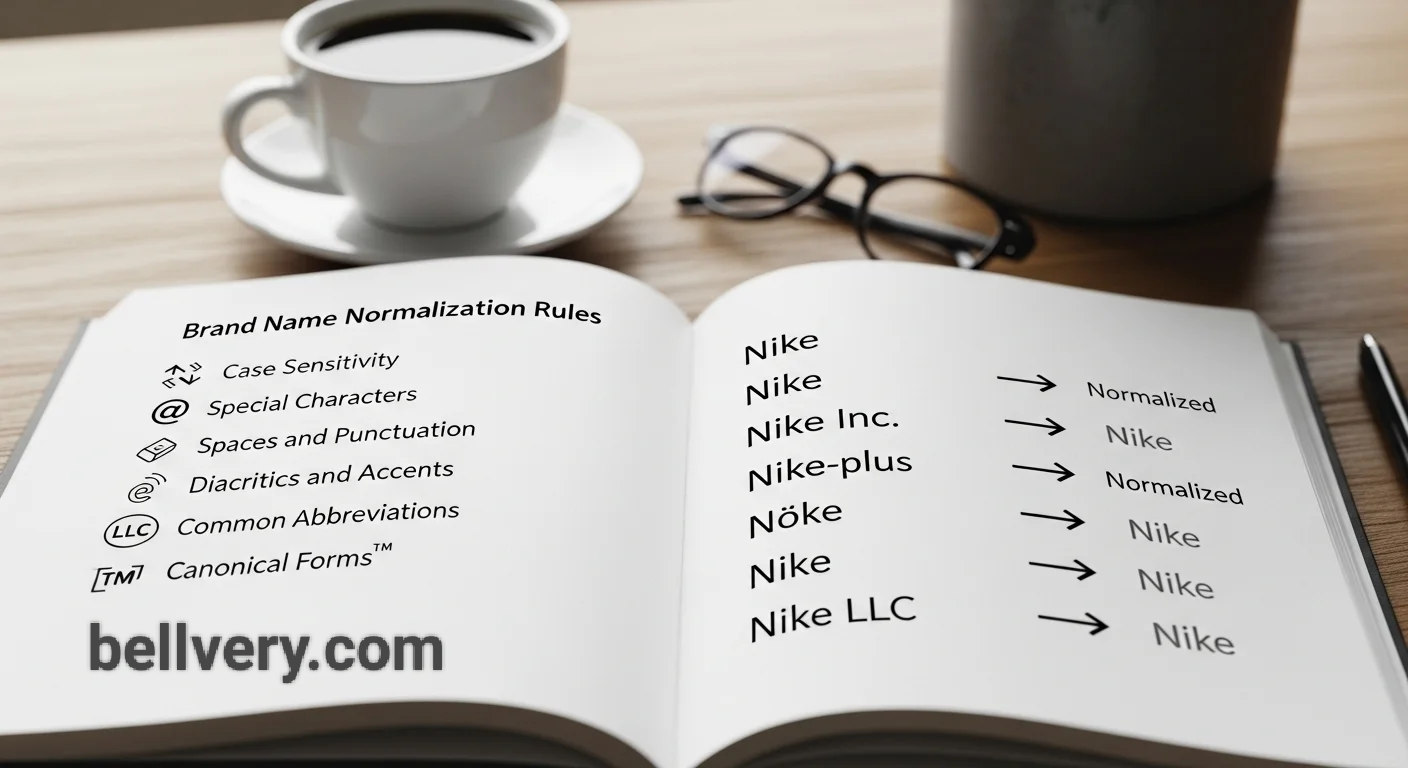
Brand identity is more than just a logo or slogan. It’s how your audience perceives you, and consistency plays a crucial role in shaping that perception. Enter brand name normalization—an essential process that ensures uniformity across all platforms and materials. If discrepancies abound, customers might confuse your business with others or misinterpret your message entirely.
Understanding the rules of brand name normalization is key to maintaining clarity and trust. Whether you’re handling legal documents, social media posts, or marketing campaigns, having a consistent approach can elevate your brand’s credibility. Let’s dive into what brand name normalization means and explore the core rules that will help keep your branding efforts on point!
Understanding Brand Name Normalization: Essential Rules for Consistency
Brand name normalization is the process of standardizing how your brand appears across various channels. It ensures consistency, reduces confusion, and strengthens recognition. By applying essential rules, businesses can maintain a cohesive identity that resonates with their audience everywhere they encounter it.
What Brand Name Normalization Means
Brand name normalization is the process of standardizing brand names across various platforms and databases. This ensures consistency, reduces confusion, and enhances data quality. By applying specific rules, businesses can maintain a unified brand identity in customer interactions and communications.
The Core Normalization Rules
Brand name normalization is essential for consistency across platforms. Key rules include removing legal suffixes, standardizing capitalization, managing punctuation, normalizing abbreviations, addressing parent/subsidiary relationships, handling regional variants, and treating “the” prefix appropriately to ensure clarity in brand representation.
Rule 1: Remove Legal Entity Suffixes
Legal entity suffixes like “Inc.,” “Ltd.,” or “LLC” can clutter brand names and create confusion. Removing these designations simplifies your data, ensuring a consistent representation across platforms and making it easier for customers to recognize your brand without unnecessary complexity.
Rule 2: Standardize Capitalization
Consistent capitalization is crucial for brand recognition. Choose a standard format, like title case or all caps, and apply it uniformly across all platforms. This approach enhances clarity and ensures that your brand name stands out in searches and marketing materials.
Rule 3: Handle Punctuation and Special Characters
Punctuation and special characters can create confusion in brand names. Standardizing their usage ensures clarity. For instance, decide whether to include or exclude hyphens and ampersands consistently. This uniformity helps users recognize your brand without ambiguity, fostering stronger connections across platforms.
Rule 4: Normalize Abbreviations
Abbreviations can create confusion if not handled properly. Normalize them by establishing standard forms. For example, use “Inc.” consistently instead of varying between “Incorporated” and “Inc.” This clarity helps maintain brand identity across all channels and datasets.
Rule 5: Handle Parent/Subsidiary Relationships
When dealing with parent and subsidiary relationships, clarity is key. Always identify the hierarchy correctly. Normalize names to reflect ownership without confusion. This ensures accurate representation in databases, enhancing brand consistency while preventing misidentification across various platforms and contexts.
Rule 6: Geographic and Regional Variants
Brands often adapt names to fit local cultures. Geographic variants can be subtle or significant, influencing recognition and loyalty. Ensure consistency by normalizing these differences, aligning your brand identity across regions while respecting local preferences and nuances in language usage.
Rule 7: Handle “The” Prefix
When dealing with brand names, the presence of “The” can create confusion. Normalize by deciding if it’s essential to the identity. For instance, “The Home Depot” becomes “Home Depot.” Consistency is key for clear recognition across platforms and data sets.
Building Your Normalization Ruleset
Start by auditing your current data. Identify inconsistencies and gaps in brand names across all platforms. Next, define canonical forms for each name to serve as the standard reference point, ensuring clarity and consistency moving forward in your normalization efforts.
Step 1: Audit Your Current Data
Begin by reviewing your existing data. Identify inconsistencies and variations in brand names across platforms. This audit will reveal how often normalization is needed and highlight areas for improvement, ensuring a cleaner, more organized dataset moving forward.
Step 2: Define Your Canonical Forms
Defining your canonical forms is crucial. This involves determining the official representation of each brand name. Consistency in these forms aids recognition and accuracy in data handling, making it easier to apply normalization rules effectively across various platforms and channels.
Step 3: Build Transformation Rules
Create clear transformation rules for your brand name normalization process. These guidelines should specify how to apply the core normalization rules consistently. Ensure each rule addresses variations, ensuring all versions of a brand name converge into a single, standardized format.
Step 4: Handle Edge Cases
Edge cases often reveal inconsistencies in brand name data. Identify these anomalies by analyzing rare occurrences, variations, or unique formats. Create tailored rules to address them, ensuring your normalization process remains robust and comprehensive for every potential scenario you encounter.
Step 5: Implement at Ingestion
To ensure consistency, implement your normalization rules during data ingestion. Integrate the process into your systems so that incoming brand names are automatically standardized. This proactive approach minimizes errors and maintains uniformity across all platforms from the start.
Common Normalization Mistakes
One common mistake is over-aggressive matching, which can merge distinct brands. Another pitfall involves destroying meaningful information during simplification. Ignoring data source quality leads to inconsistencies, and adopting a one-time cleanup mindset overlooks the need for ongoing maintenance and updates.
Over-Aggressive Matching
Over-aggressive matching can lead to significant data inaccuracies. When you forcefully align brand names, you risk losing vital distinctions. This approach often merges unrelated entities or misses nuances that are crucial for accurate representation in your branding strategy.
Destroying Meaningful Information
One common pitfall in brand name normalization is destroying meaningful information. Overzealous simplification can erase unique identifiers, nuances, or historical significance inherent in names. This loss can lead to confusion and misrepresentation of the brand’s identity within the marketplace.
Ignoring Data Source Quality
Ignoring data source quality can lead to inconsistent brand name normalization. Relying on unreliable sources introduces errors and biases, undermining the integrity of your data. Always prioritize high-quality inputs to ensure accurate branding across all platforms and communications.
One-Time Cleanup Mindset
Adopting a one-time cleanup mindset can be misleading. It suggests data normalization is a one-off task. In reality, brand name normalization requires ongoing attention and refinement to adapt to new information and maintain consistency across all channels effectively.
When to Automate vs. Manual Review
Automation is ideal for high-volume, repetitive tasks requiring speed and consistency. Manual review shines in nuanced scenarios needing human judgment. Assess your data’s complexity to determine the right balance between efficiency and accuracy, ensuring quality while maintaining productivity levels.
Frequently Asked Questions
Brand name normalization can be complex, but understanding the basics is crucial. Here are some common queries:
What is brand name normalization?
It’s a process to standardize how brand names appear across various platforms.
Why is it important?
Consistency enhances brand recognition and improves data quality.
How do I start with normalization?
Begin by auditing your existing data for inconsistencies.
Can I automate this process?
Yes, automation can help; however, manual reviews are essential for accuracy.
What pitfalls should I avoid?
Be cautious of over-aggressive matching that might alter intended meanings.
Remember that maintaining consistency in branding goes beyond just rules—it’s about preserving identity as well.