

Looking for fun debate topics that actually get people talking? You’re in the right place. Whether you’re a teacher planning a classroom activity, a student prepping for a debate club, or just looking for something entertaining to argue about with friends, this guide has you covered.
Below, you’ll find a huge collection of fun debate topics organized by category — from silly hypotheticals to thought-provoking questions — plus tips on how to run a great debate and answers to the most common questions people ask.
Why Fun Debate Topics Matter
Debating isn’t just about winning an argument. It builds real skills that carry over into everyday life:
- Critical thinking — you learn to break down an issue and see it from multiple angles
- Public speaking confidence — arguing a position out loud builds comfort speaking in front of others
- Listening skills — good debaters listen closely to counter the other side effectively
- Creativity — lighthearted topics push people to defend positions in clever, unexpected ways
The best fun debate topics strike a balance: they’re light enough to keep things playful, but interesting enough that people actually have something to say.
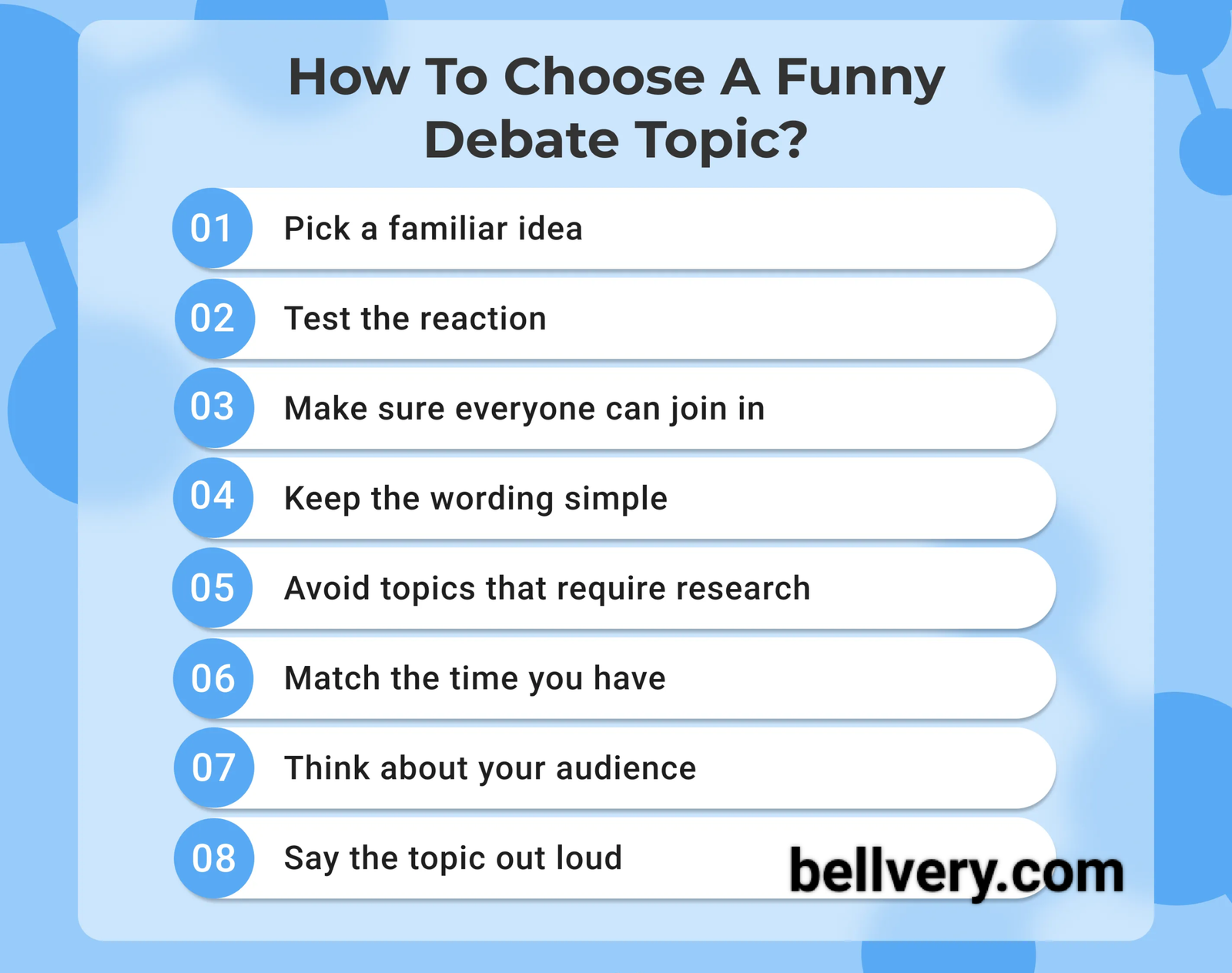
How to Pick the Right Debate Topic
Before jumping into the list, here’s what makes a topic “debate-worthy”:
- Two clear sides — a good topic naturally splits a room roughly down the middle
- No obvious right answer — if everyone agrees immediately, there’s nothing to argue about
- Relatable to the audience — a topic about school lunches works great for students; office debates might lean toward workplace culture instead
- Room for humor — the best fun topics let people get a little silly while still making real points
Fun and Silly Debate Topics
These are perfect for icebreakers, classroom warm-ups, or casual hangouts:
- Is a hot dog a sandwich?
- Would you rather fight one horse-sized duck or 100 duck-sized horses?
- Is cereal a soup?
- Should pineapple be allowed on pizza?
- Is water technically “wet”?
- Would you rather have unlimited money or unlimited time?
- Should ketchup go in the fridge or the cupboard?
- Is it better to be too hot or too cold?
- Should socks be worn with sandals?
- Is a straight line the shortest distance, or is teleportation more efficient?
Fun Debate Topics for School and Classrooms
Great for building structured argument skills while keeping students engaged:
- Should students get to grade their teachers?
- Is homework actually necessary for learning?
- Should school uniforms be mandatory?
- Should the school day start later?
- Should students be allowed to use phones in class?
- Is it better to study alone or in groups?
- Should grades be replaced with pass/fail systems?
- Should recess be extended for older students?
- Should schools remove cursive handwriting from the curriculum?
- Should students choose their own seating in class?
Fun Debate Topics About Technology
Technology topics naturally spark strong opinions on both sides:
- Are smartphones making people less social?
- Should social media have an age limit?
- Is AI-generated art real art?
- Should self-driving cars fully replace human drivers?
- Is it better to text or call?
- Should video games be considered a sport?
- Are streaming services better than traditional cable TV?
- Should robots have rights if they become advanced enough?
- Is it okay to date someone you met through an app?
- Should schools teach coding instead of a foreign language?
Fun Debate Topics About Food
Food debates are almost guaranteed to get everyone talking:
- Is a taco a sandwich?
- Should breakfast food be allowed at any time of day?
- Is fast food actually worse than “healthy” packaged snacks?
- Should tipping be replaced with higher menu prices?
- Is a Pop-Tart a ravioli?
- Are food trucks better than sit-down restaurants?
- Should schools serve pizza every day?
- Is peanut butter and jelly the best sandwich combo?
- Should spicy food lovers get a discount for finishing extra-hot dishes?
- Is brunch a real meal or just an excuse to day-drink?
Fun Hypothetical Debate Topics
These “would you rather” style debates are great for creative thinking:
- Would you rather be invisible or be able to fly?
- Would you rather always be 10 minutes late or 20 minutes early?
- Would you rather live without music or without movies?
- Would you rather know when you’ll die or how you’ll die?
- Would you rather have the ability to read minds or predict the future?
- Would you rather live in a treehouse or an underground bunker?
- Would you rather be famous but broke, or rich but unknown?
- Would you rather never use social media again or never watch TV again?
- Would you rather have a rewind button or a pause button for your life?
- Would you rather always speak your mind or never speak again?
Tips for Running a Great Debate
To get the most out of any debate topic, keep these tips in mind:
- Set clear time limits. Give each side 2-3 minutes to make their case, then allow rebuttals.
- Assign sides randomly. This forces people to argue positions they might not personally hold, which builds stronger critical thinking.
- Encourage humor, not personal attacks. The goal is fun engagement, not conflict.
- Use a moderator. Someone neutral keeps the debate on track and makes sure both sides get equal time.
- Wrap up with a vote. Letting the audience vote on who made the better argument adds a fun, competitive element.
Frequently Asked Questions (FAQs)
1. What makes a debate topic “fun” instead of serious? Fun debate topics are usually lighthearted, relatable, and don’t carry heavy real-world consequences — think “is cereal a soup?” rather than deeply political or sensitive issues. They let people argue passionately without the tension that serious topics can bring.
2. What are good fun debate topics for beginners? Silly hypotheticals and food-related topics tend to work best for beginners, since they don’t require research and everyone already has an opinion — like “is a hot dog a sandwich?” or “should pineapple be on pizza?”
3. How long should a fun debate last? For casual settings, 5-10 minutes per topic works well — enough time for both sides to make their case without dragging on. Classroom debates can run 15-20 minutes if you include rebuttals and audience questions.
4. Can fun debate topics still teach real skills? Yes. Even silly topics build genuine skills like public speaking, quick thinking, and structuring an argument — the lighthearted subject matter just makes it easier for people to relax and participate.
5. How do I come up with more fun debate topics on my own? Look at everyday disagreements — food preferences, technology habits, or pop culture opinions — and turn them into a two-sided question. If a topic naturally splits a room into two camps, it’s probably a good debate topic.
6. Are fun debate topics good for team-building activities? Definitely. They’re low-stakes, encourage participation from everyone, and often reveal funny, unexpected opinions that help teams bond.
Conclusion
Fun debate topics are one of the easiest ways to spark genuine conversation, whether you’re in a classroom, at a team-building event, or just hanging out with friends. The key is picking topics that are relatable, have two clear sides, and leave enough room for humor and creativity. With the categories and tips in this guide — from silly hypotheticals to food debates to classroom-ready questions — you’ll have more than enough material to keep any group talking, laughing, and thinking for hours.